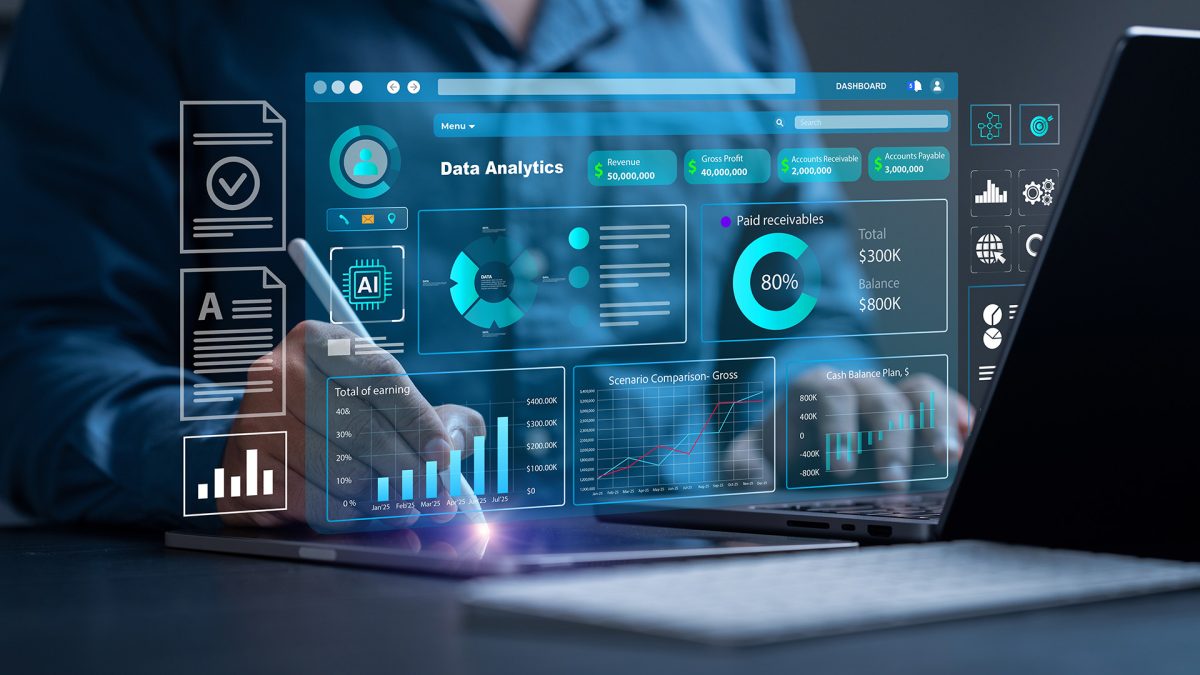
In today’s digital era, data has become a valuable asset for any organization. However, simply collecting information is not enough if it is not supported by the right structure to manage it. Today, companies generate data from a wide range of sources, including core systems, various applications, big data solutions, and a broad array of devices. This creates a major challenge: managing all that data and its inherent complexity, ensuring it does not become a fragmented set of pieces but rather a continuous asset that turns into a competitive advantage for the company.
Many organizations still operate under traditional models that limit their competitive potential, with infrastructures that fail to scale at the pace required by the business and that involve high maintenance costs, both in hardware and operations.
This is compounded by the lack of timely access to information and the latent risks of security breaches or data loss—factors that significantly hinder the ability to enable advanced analytics capabilities. Without a solid technological foundation, decision-making becomes slow and based on intuition rather than concrete data.
What defines a modern data platform?
A strong data platform is not just a repository; it is the fundamental foundation for efficient decision-making. Its design must incorporate scalable and secure architectures, optimized to maximize the value of each data element and accelerate organizational innovation.
A comprehensive approach to modernizing these platforms includes designing architectures in the cloud, on-premise, or hybrid environments. This enables efficient management of data storage and processing, optimizing performance for both analytical and operational workloads. In addition, a modern platform must enable advanced capabilities and provide services to every user within the organization, all under a strict framework of governance, security, and compliance.
Strategic business benefits
Implementing this type of technological solution delivers tangible benefits that directly impact organizational outcomes:
- Unlimited scalability: allows storage to adapt to real-time business demand.
- Financial efficiency: reduces operational costs by eliminating unnecessary infrastructure.
- Robust security: ensures data protection through multiple security layers and guarantees operational continuity with high availability.
- Democratized access: enables secure and simple access to data anytime and anywhere.
- Innovation boost: enhances analytical capabilities, transforming data into actionable insights for professional and consistent decision-making.
If your current platform is not keeping pace with your organization’s growth, modernization can be accelerated through the use of AI and advanced automation. This enables a safe migration aligned with business needs, allowing data to evolve from a management challenge into a solid foundation that drives the business forward into the future.