In 1986, the entire world watched the World Cup in Mexico through bulky tube televisions, tuning into analog signals captured by antennas carefully positioned by hand. Replays were a technical luxury, and refereeing decisions depended entirely on the human eye keeping up with elite athletes. Forty years later, the country made history again by becoming the first host of three World Cups (including 1970). But the tournament held in Mexico in 2026 is radically different from the one played four decades ago. It is no longer just about building physical infrastructure to host matches, but about creating a hyperconnected ecosystem where software and data operate on the same field at the speed of light.
For companies like Baufest, constantly focused on leading digital transformation in the region, this evolution between one World Cup and the next is the ideal example of how people-centered technology can redefine entire industries. The digital transformation of football has not simply been the addition of new gadgets; it represents a paradigm shift in how the most widely followed sport in the world is managed, played, and experienced.
Looking back, the contrast is absolute. The Estadio Azteca—the iconic venue that hosted both tournaments—remains a masterpiece of concrete architecture, but now also functions as an intelligent data processing hub. To understand the quantum leap the industry has made over these four decades, we can analyze four technological dimensions that highlight the difference between both eras.
1. The end of controversial plays
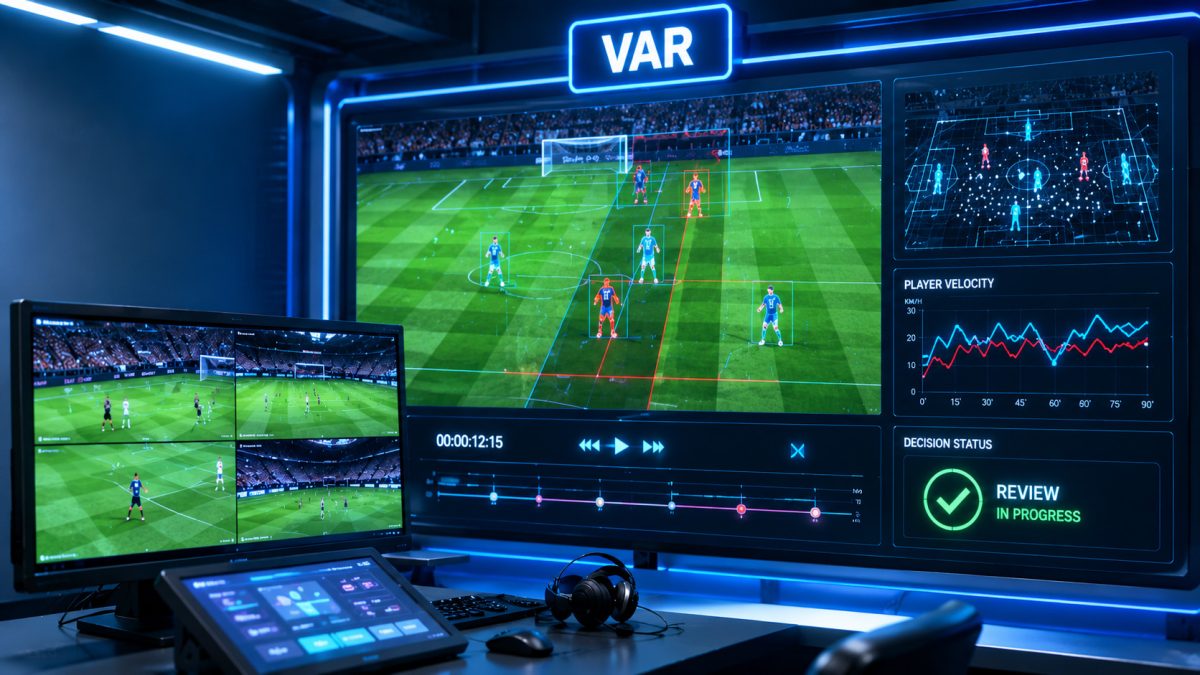
In Mexico ’86 (and in subsequent World Cups), human error was part of the game. Diego Maradona’s most famous goal against England was validated simply because the Tunisian referee Ali Bennaceur did not have a clear angle.In 2026, however, the margin of error has been reduced to millimeters thanks to mission-critical software systems. The official ball includes inertial measurement unit (IMU) sensors that send data 500 times per second to a video operations room. This feeds the Semi-Automated Offside Technology (SAOT), an AI system that processes the real-time positioning of the ball and players through optical tracking cameras to instantly detect offside situations.
2. The fan experience
Forty years ago, the shared World Cup experience for those outside the stadium was limited to watching the broadcast on television or listening on the radio. Statistics were basic (goals, fouls, corner kicks) and calculated manually after the match.In 2026, we are fully immersed in the era of Smart Stadiums and immersive experiences. 5G networks and edge computing systems manage biometric access for thousands of people simultaneously while personalizing commercial offerings. Meanwhile, cloud infrastructure enables fans to receive advanced real-time statistics—such as expected goals (xG)—through mobile applications enhanced with augmented reality.
3. Performance and data management
In Mexico ’86, physical preparation relied on stopwatches, intuition, and chalkboard tactics. Opponent analysis was done by watching VHS tapes—if they were even available.In 2026, every player is a walking data generator. They wear biometric vests with integrated GPS that measure fatigue, positioning on the field, and movement patterns.
Today, simply watching the game is no longer enough. The difference lies in data analytics platforms that process millions of data points, enabling injury prevention through predictive models and real-time tactical adjustments—even during halftime. The introduction of hydration breaks, which did not exist 40 years ago, now provides an opportunity to rethink strategy mid-game.
4. Match broadcasting
In 1986, the major technological milestone was the consolidation of international satellite broadcasting in color, along with early experimental high-definition television tests by Japanese networks. Forty years later, signals are no longer transmitted solely via satellite. They are distributed globally through cloud-based architectures, without geographic limits and with minimal latency. Artificial intelligence automates the creation of highlights in real time, adapting video formats dynamically for different platforms.
For Baufest, this technological deployment in the world’s most important sporting event is the clearest example of how software engineering and real-time data orchestration can transform a massive and complex environment into a seamless, secure, and predictable experience.
Just like on the field, success in today’s market does not depend on adopting technology in isolation, but on having the strategic capability to integrate robust, people-centered systems—turning millions of data points into intelligent decisions that drive business performance.
Mexico ’86 gave us the magic of human improvisation. Mexico ’26 shows how software engineering can elevate that same magic to unprecedented levels of precision. And just as football evolved toward data and software, Baufest helps organizations lead their own digital transformation—moving from isolated systems to intelligent decision-making.
By Enrique Bermeo, Solution Architect at Baufest.