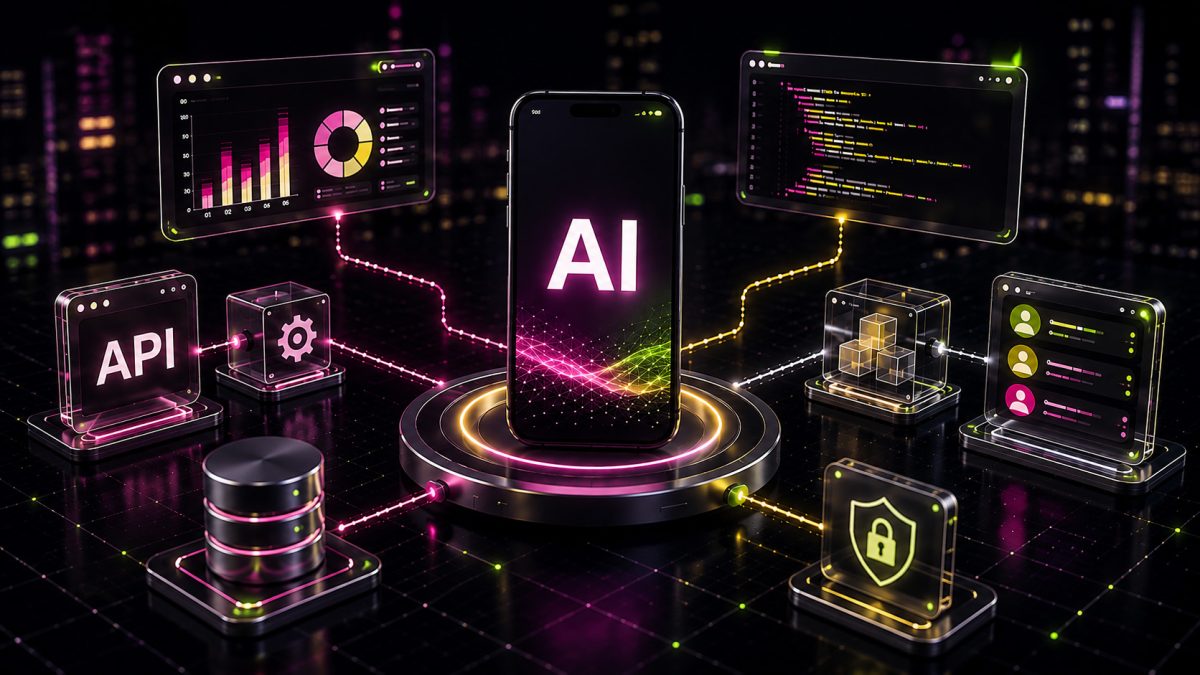
This technological gap ultimately creates a bottleneck that slows innovation and intelligent automation in key areas of the organization.
This happens because most companies operate on systems that have accumulated decades of design decisions that are now obsolete. They rely on closed interfaces, unstructured data, and manual processes that made sense in the past because they were built around the limitations of that time, but today they make it difficult to integrate new technologies. In many cases, the problem is not simply having outdated software, but dealing with accumulated complexity: business rules embedded in code and critical knowledge concentrated in the hands of a few people, turning any modernization effort into a process perceived as a difficult-to-assess risk.
The longer an organization waits to address this gap, the harder it will become to integrate AI agents into critical business processes. Without the right foundation, AI initiatives often remain stuck in experimentation phases or pilots that never reach production due to a lack of proper architecture or governance. This results in wasted time, money, and opportunities to accelerate the company’s technological transformation.
What are Agentic-Ready Applications?
To address this challenge, Baufest proposes the concept of Agentic-Ready Applications. This approach consists of modernizing existing applications to expose their capabilities through optimized APIs, enabling AI agents to discover, understand, and use them effectively.
The goal is to create an interoperable and resilient architecture designed to evolve alongside AI. This means transforming the application ecosystem so that it stops being a limitation and becomes a source of value.
Baufest’s service also combines architecture, data, and governance to ensure the effective and secure adoption of agents in production environments. This is achieved through:
- Definition of governance models: establishing access policies and escalation mechanisms.
- Security controls: implementing human-in-the-loop frameworks, audit trails, and observability to maintain control over agent actions.
- Scalability without compromise: an architecture that enables organizations to expand their AI capabilities without sacrificing the integrity or security of core systems.
The process of making an organization “agentic” is incremental and pragmatic. It begins with a maturity assessment using a scorecard and a prioritized roadmap to identify which areas should be addressed first. The next step is designing and building a layer of “agent-consumable” interfaces on top of existing systems.
A key differentiator is the use of AI itself as a catalyst for change: models are used to analyze legacy code, extract business rules, and document critical knowledge, dramatically reducing uncertainty and risk throughout the process. Finally, a real agent Proof of Concept (PoC) is developed together with the company and applied to the business to validate the efficiency of the new architecture.
This entire process makes one thing clear: the organizations that will lead in the future will not be those that experiment the most, but those that successfully prepare their applications to evolve at the pace of technology while maintaining control, agility, and a strong business focus. Agentic-Ready Applications are the foundation needed to turn artificial intelligence from a promise into a scalable reality.